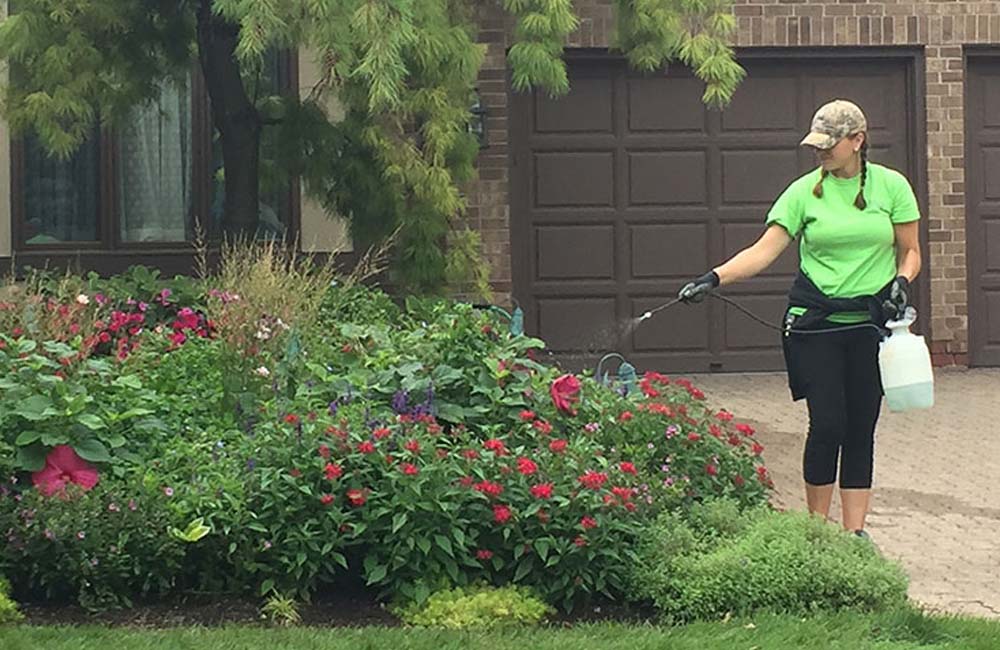
One of the most basic garden needs is water. Sufficient water is absolutely essential to keep your plants healthy. Fertilizer is often applied with water, so we’d like to offer some tips for watering and fertilizing your gardens.
– If you have questions or want to schedule help with these maintenance items always feel free to contact us directly and set up a FREE estimate!
WATERING
- New plantings will need more attention to watering throughout the season.
- Supply enough water to soak the soil around the entire root system at each watering.
- Allow the soil to dry slightly between watering so that oxygen can reach the roots.
- Water at the base of each plant to direct the water, minimize waste and prevent foliage diseases.
- Soaker hoses can irrigate many plants at once, but must be left on for longer periods of time.
- Sprinklers will cover a larger area, but should be used early in the day, to prevent fungal problems.
- Container plantings need to be checked often and may require daily watering, twice daily on extremely hot days.
- Monitor for signs of stress. Drooping leaves can be a sign of over-watering as well as under-watering. Check the soil for moisture to a depth of one inch or squeeze a handful to test saturation.
- As plants mature, deeper and less frequent watering will promote a deep healthy root system.
FERTILIZING
Perennials, Groundcovers & Annuals
- Flowering plants need more nourishment to produce blooms. Look for fertilizers made specifically for blooming plants.
- Slow-release fertizer such as Scotts “Osmocote” adds essential nutrients which are time-released into your soil. This gives up to 4 months of steady fertilization which helps prevent over-fertilizing.
- Soluble fertilizers, such as “Miracle Gro” can give faster results. Needs to be reapplyed frequently, every 2 weeks or so.
- Stop fertilizing perennials in September; let the plants go naturally dormant and prepare for winter.
Trees & Shrubs

- Fertilize new plantings annually for two years with slow-release fertilizer to promote establishment. After that, fertilize every other year until the plant matures.
- Early spring applications are most beneficial. This is when they are most actively growing.
- Fertilizer can be applied on the ground surrounding the plant. Specialists recommend applying fertilizer over the entire root zone of a plant. This can be roughly determined by observing the “drip line” or the perimeter of the canopy of the tree or shrub.
- Look for signs of nutrient deficiency: pale green or yellow leaves, reduced leaf size, premature fall coloration, leaf drop, and overall reduced plant growth/vigor.
- Established trees and shrubs usually get what they need from fertile garden soil without additional fertilization.
- Stop fertilizing in late summer to slow new growth, which can be susceptible to damage during our harsh Minnesota winters.