
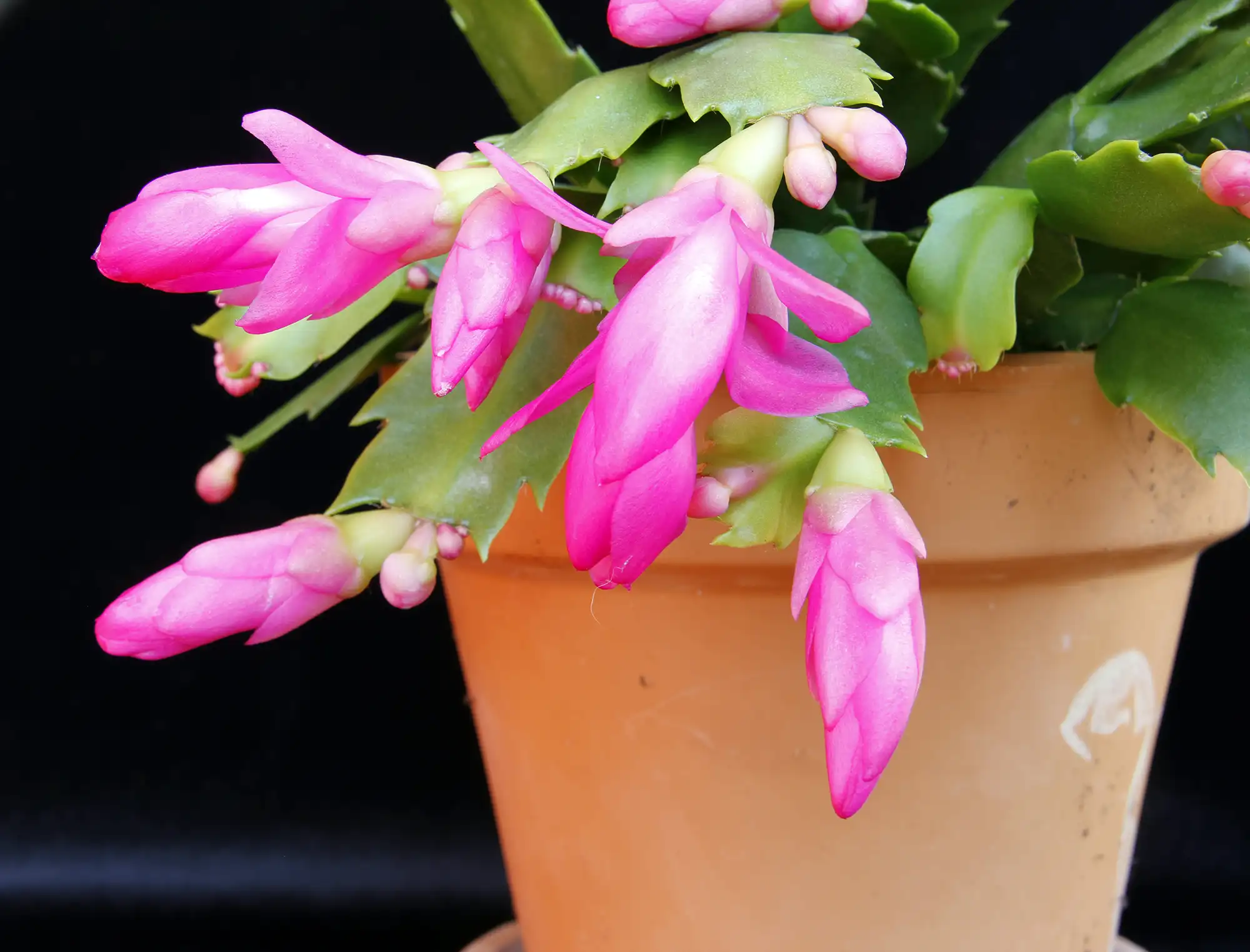
Thanksgiving, Christmas, and Easter cacti are beautiful holiday plants belonging to the genus Schlumbergera and Rhipsalidopsis. They are often confused, but they differ slightly in blooming season and leaf structure. The blooming timing of each is based on day length. Here are some tips for growing and caring for each type.
Identifying the Cacti
Thanksgiving Cactus (Schlumbergera truncata)
- Blooming time: Late November
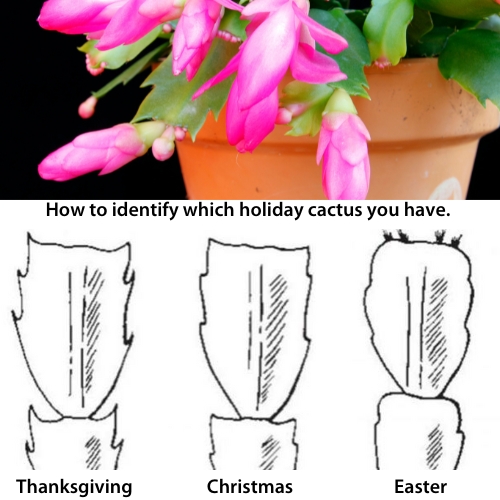
- Leaves: Pointed, jagged edges (toothed or claw-like tips).
- Flowers: Vibrant red, orange, or pink.
Christmas Cactus (Schlumbergera bridgesii)
- Blooming time: Late December
- Leaves: Smooth, scalloped edges (no sharp points).
- Flowers: Soft pink, red, or white tones.
Easter Cactus (Rhipsalidopsis gaertneri)
- Blooming time: Late March to April
- Leaves: Rounded, smoother edges.
- Flowers: Star-shaped, in red, orange, or pink.

General Care Tips
Light:
- Provide bright, indirect light. Avoid direct sunlight, as it can scorch the leave
- An east-facing window is ideal. They can be placed near south or west facing windows but not directly in sunlight.
Temperature
- Keep in temperatures between 60°F–70°F (15°C–21°C).
- Avoid drafts, heating vents, or extreme temperature fluctuations.
Soil:
- Use well-draining soil. A mix for cacti and succulents works well, but you can mix potting soil with sand or perlite.
Watering:
- Water thoroughly when the top inch of soil feels dry. While they have cactus in their name they need more frequent watering than traditional cactus.
- Reduce watering in the fall (before the blooming period) to encourage buds.
- Avoid overwatering, as it can lead to root rot.
Humidity:
- Maintain moderate humidity levels. These plants thrive in 50–60% humidity.
Special Care for Blooming
Encouraging Blooms:
- Thanksgiving/Christmas Cactus:
- Reduce watering in late fall.
- Provide 12–14 hours of darkness each night for about 6 weeks before the desired bloom time.
- Easter Cactus:
- Place in a cooler location (50°F–55°F)
- Reducing watering in late winter can encourage blooms.
Post-Bloom Care
- Once flowers fade, trim off spent blooms and let the plant rest.
- Resume normal watering and feeding after a few weeks.
Fertilization
- Feed every 4–6 weeks during the growing season (spring and summer) with a balanced fertilizer diluted to half strength.
- Stop feeding in fall to prepare the plant for blooming.
Pruning and Propagation:
- Prune lightly after the blooming season to encourage bushy growth.
- Propagate by taking a segment of 2–3 jointed leaves, place it on your countertop to allow the cut end to callous for a day, and then plant it in moist soil.
With proper care, these cacti will reward you with vibrant, festive blooms year after year.