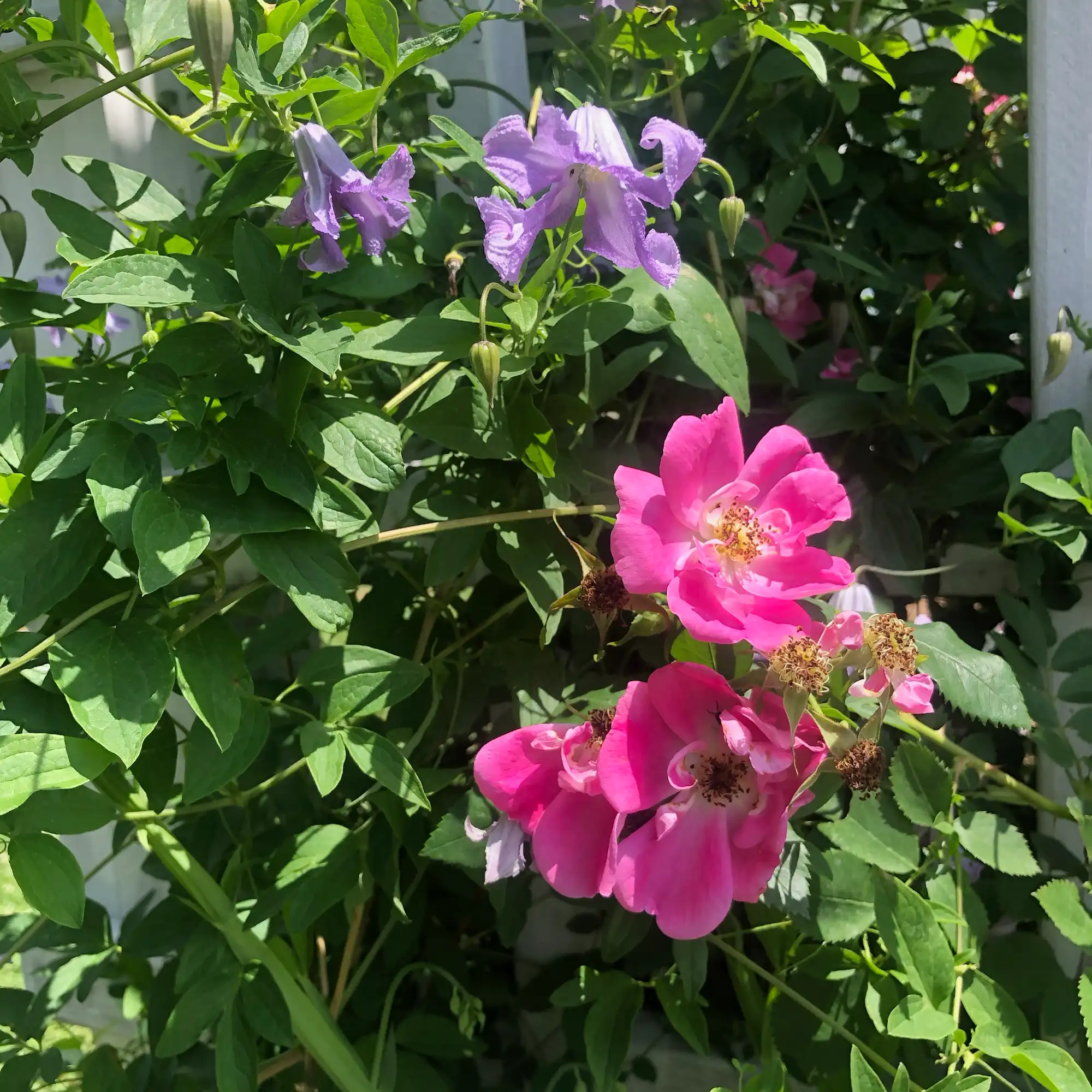
Clematis and hardy climbing roses are one of the most reliable pairings for cold-climate vertical gardens. In Zone 4 Minnesota, where winter lows regularly dip to -30°F, both plants need to be tough. But when you select the right varieties and follow a few key planting techniques, this combination delivers months of layered blooms on a single trellis, arbor, or fence.
This guide covers everything you need to know about growing clematis with climbing roses in Zone 4, from variety selection and planting depth to pruning schedules and winter preparation.
Why Clematis and Climbing Roses Grow Well Together
These two plants are complementary in structure and bloom timing. Climbing roses produce sturdy, arching canes with generous flower clusters. Clematis threads through that framework, adding fine texture and flowers that can appear before, alongside, or after the roses bloom. The result is extended seasonal interest without requiring additional garden bed space.
Both plants share similar growing requirements: full sun (at least 6 hours daily), well-drained soil enriched with compost, and consistent watering during establishment. The one difference is that clematis prefer shaded roots while their upper growth reaches into sunlight. Planting low perennials or applying mulch at the base of the clematis solves this easily.
Hardy Variety Pairings for Zone 4 and Cold Climates
Climbing Roses for Zone 4
Not all climbing roses survive Zone 4 winters. The Canadian Explorer Series, bred specifically for cold hardiness, includes several proven performers. ‘John Cabot’ produces deep fuchsia-red semi-double blooms on vigorous canes that reach 8 to 10 feet. ‘William Baffin’ is one of the hardiest climbers available, with deep pink flowers and strong disease resistance. ‘John Davis’ offers soft pink, spicy-scented blooms and a more graceful arching habit.
Other reliable options include ‘Henry Kelsey,’ which produces bright red semi-double flowers, and the University of Minnesota’s own hardy rose introductions. Own-root roses tend to survive Zone 4 winters better than grafted varieties, since the entire plant is cold-hardy rather than just the rootstock.
Clematis Varieties for Cold Climates
For pairing with climbing roses, Group 3 (hard-prune) clematis are the strongest choice. Because roses also require annual pruning, having a clematis that gets cut back to 6 to 12 inches each spring simplifies maintenance and prevents tangled stems.
Top Group 3 picks for Zone 4 include ‘Jackmanii’ (deep purple, the most widely grown clematis), ‘Etoile Violette’ (dark violet, extremely floriferous), and the viticella types such as ‘Betty Corning’ (lavender bells with light fragrance) and ‘Mme. Julia Correvon’ (wine-red). ‘Polish Spirit’ is another vigorous option, but note that it can be too aggressive for smaller climbing roses. Use it with robust climbers like ‘William Baffin’ that can handle competition.
Group 1 clematis from the Atragene group (alpina, macropetala types) are also extremely cold-hardy and bloom early in spring before roses begin. These require no pruning, which can be an advantage, but their stems remain on the structure year-round and may complicate rose pruning.
How to Plant Clematis and Climbing Roses Together
Site Selection and Soil Preparation
Choose a location with at least 6 hours of direct sunlight and soil that drains well. Roses are especially vulnerable to root rot in soggy conditions, particularly heading into winter. Amend heavy clay soils with compost or aged manure to improve drainage and fertility. Slightly alkaline to neutral pH (6.5 to 7.0) works well for both plants.
Planting the Rose
Dig a generous hole and enrich it with compost. In cold climates, plant the rose so the graft union sits 2 to 3 inches below the soil surface. This protects the graft from winter damage and encourages the rose to develop its own roots over time. Install a sturdy support structure before planting: an arbor, trellis, or system of horizontal wires attached to a wall or fence. Hardy climbing roses can reach 8 to 10 feet and need something solid to grow on.
Planting the Clematis
Position the clematis 12 to 18 inches away from the rose. This gives each plant room to establish its own root system while still allowing their above-ground growth to intermingle. Bury the clematis crown 2 to 3 inches deeper than it sat in the nursery pot. Deep planting encourages multi-stem growth from below the soil line and gives the plant a better chance of regrowing if stems are damaged by winter cold or clematis wilt.
Apply 2 to 3 inches of mulch around the base of the clematis (keeping it a few inches away from the stems) to keep roots cool and retain moisture. Alternatively, plant shallow-rooted perennials like catmint or low-growing campanulas at the base.
Watering, Fertilizing, and Training
Watering
Water both plants consistently during their first growing season. Roses respond best to deep, infrequent soakings that encourage roots to grow downward. Clematis prefers more even, consistent moisture. Once established (typically after the second year), both become more drought-tolerant, but supplemental watering during dry stretches will improve bloom quality.
Fertilizing
Apply a balanced rose fertilizer in late spring once new growth is well underway, and again in mid-summer after the first flush of blooms. Stop fertilizing by early August so new growth has time to harden off before winter. For clematis, use a low-nitrogen, balanced fertilizer (such as 5-10-10) early in the season to promote flowering rather than excessive foliage.
Training and Tying
Train climbing rose canes as horizontally as possible along your support structure. Horizontal training breaks apical dominance and encourages more blooms along the length of each cane rather than only at the tips. As clematis stems emerge, gently weave or tie them through the rose’s framework. Clematis climbs by wrapping its leaf petioles around supports, so it naturally grabs onto rose canes and trellis wires.
Pruning Clematis and Climbing Roses
When and How to Prune Climbing Roses
Prune climbing roses in early spring, just as buds begin to swell. Remove dead, damaged, or diseased wood first. Then thin out older canes to make room for vigorous new growth. Tie remaining canes horizontally to the support. Avoid heavy fall pruning, which can stimulate tender new growth vulnerable to freeze damage.
Clematis Pruning by Group
Group 3 clematis (Jackmanii, viticella types, and other late bloomers) should be cut back to 6 to 12 inches above ground level in late winter or early spring. This is the simplest pruning approach and the most practical when clematis shares a structure with roses, since you can prune both plants at roughly the same time without worrying about damaging old clematis wood.
Group 2 clematis (large-flowered hybrids like ‘Nelly Moser’) bloom on both old and new wood. They require lighter, more selective pruning. While beautiful, these are more complex to manage alongside climbing roses and are better suited to experienced gardeners.
Group 1 clematis (alpina, montana, macropetala) bloom on the previous year’s growth and need little to no pruning. If you use a Group 1 clematis with roses, plan to prune the rose carefully around the established clematis stems.
Winter Protection in Zone 4
Hardy climbing roses from the Explorer Series or similar cold-hardy breeding programs generally survive Zone 4 winters without elaborate protection. Still, a few steps help ensure strong performance year after year.
Stop fertilizing by early August. After the ground freezes in late fall, mound 8 to 12 inches of soil, compost, or shredded leaves around the base of the rose to insulate the crown and graft union. If canes are on an exposed structure, you can wrap them loosely with burlap, though most Explorer Series roses handle open exposure well.
For clematis, Group 3 varieties are already cut to near ground level, so simply ensure the mulch layer is maintained over the crown. Group 1 and 2 clematis retain their above-ground stems through winter. A generous mulch layer over the root zone and consistent snow cover provide the best insulation.
Common Problems and Solutions
Clematis wilt is a fungal disease that can cause stems to collapse suddenly, often just as the plant is about to bloom. Deep planting (crown 2 to 3 inches below soil) is the best preventive measure, since the plant can regenerate from buried nodes. Viticella and Group 3 clematis are generally resistant to wilt. If wilt strikes, cut affected stems to the ground and wait for regrowth.
Black spot and powdery mildew can affect roses. Choose disease-resistant varieties (the Explorer Series roses have strong resistance), provide good air circulation, and avoid overhead watering. Remove and dispose of any fallen leaves showing signs of disease.
Frequently Asked Questions
Can I plant clematis and climbing roses in the same hole? No. Space them 12 to 18 inches apart so their root systems are not competing directly. They will mingle above ground, but below the soil they each need their own space to establish.
What is the best clematis pruning group to pair with climbing roses? Group 3 (hard-prune) clematis is the most practical choice. Since both plants need pruning in early spring, you can cut the clematis back to near ground level and then prune the rose without dealing with tangled old clematis stems.
How long does it take for clematis and roses to fill a trellis? Climbing roses typically need 2 to 3 years to reach the top of a standard 8-foot trellis. Clematis can grow 6 to 10 feet in a single season once established, so it often fills in faster than the rose. Full coverage with intermingled blooms usually takes 2 to 3 growing seasons.
Do I need to protect clematis and climbing roses in winter in Zone 4? Hardy varieties from the Explorer Series (roses) and Group 3 viticella types (clematis) generally survive Zone 4 winters with minimal protection. Mounding mulch or soil over the rose’s crown and maintaining mulch over the clematis root zone is sufficient in most years.
When is the best time to plant clematis and climbing roses in Minnesota? Late spring, after the last frost date (typically mid-May in the Twin Cities area), is the safest time to plant. Container-grown plants can also go in through early summer, provided you water consistently during establishment.
Can I grow clematis and climbing roses in a container in Zone 4? It is possible, but overwintering is more challenging. Container roots are less insulated than in-ground roots. Use a large pot (at least 18 inches wide and deep), select the hardiest varieties, and plan to move the container to an unheated garage or insulate it heavily for winter.