
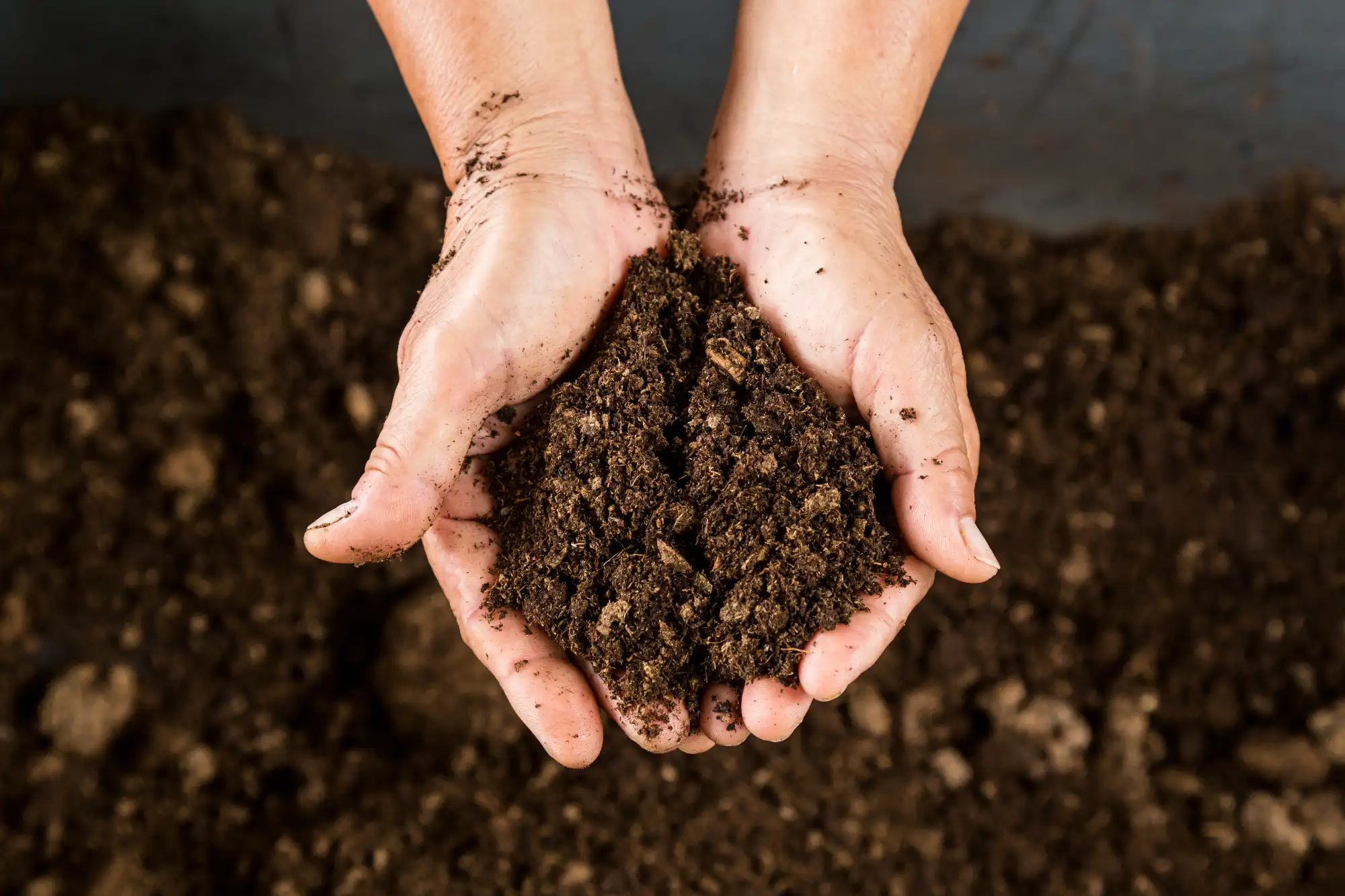
Adding compost to your vegetable garden each year is one of the most effective ways to build long-term soil health. It works on several levels, improving physical structure, nutrient availability, and biological activity. All of these contribute to stronger, more productive plants.
How Compost Improves Soil Structure
Compost enhances soil structure by increasing organic matter content. In clay soils, it helps break up dense, compacted particles, improving aeration and drainage so roots can grow more freely. In sandy soils, compost adds cohesion, allowing the soil to hold water and nutrients more effectively. Over time, this leads to a crumbly, well-aggregated texture that supports healthy root development and more consistent moisture levels.
Compost Delivers Slow-Release Nutrients
Unlike synthetic fertilizers, which can deliver nutrients in quick, sometimes overwhelming doses, compost acts as a slow-release source of essential elements. It provides a steady supply of nitrogen, phosphorus, potassium, and micronutrients as it continues to decompose. This gradual release supports sustained plant growth throughout the season and reduces the risk of nutrient leaching into surrounding soil and groundwater.
Boosting Biological Activity in Garden Soil
One of the most valuable roles compost plays is boosting biological activity. It introduces beneficial microorganisms, including bacteria, fungi, and other soil-dwelling organisms, that help break down organic matter and fix nutrients into plant-available forms. These microbes create a more balanced soil ecosystem and compete with certain harmful pathogens, contributing to overall plant resilience.
Better Water Retention for Vegetable Gardens
Compost improves water-holding capacity, helping soil retain moisture during dry periods while still draining excess water after heavy rains. This leads to more stable soil conditions and less stress on vegetable crops, especially during Minnesota’s mid-summer heat.
Annual Composting Builds Cumulative Results
Adding compost annually builds cumulative benefits. Each year, organic matter increases, microbial populations strengthen, and the soil becomes more fertile and structurally sound. Over time, this creates a healthier, more productive vegetable garden that requires fewer external inputs and supports consistent harvests season after season.
Garden Maintenance Services from Pleasant View Gardens
For all your garden needs, Pleasant View Gardens provides expert garden maintenance from March through November, keeping your yard and gardens looking their best all season. Our flexible maintenance packages can be customized to fit your specific needs and schedule.
Call us at 612-978-3487 for a free consultation.